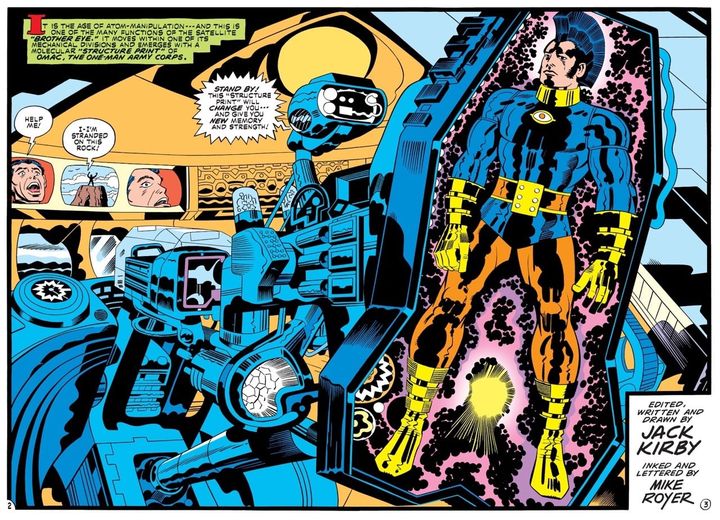
Jack Kirby’s OMAC: One Man Army Corps is a tour de force that thrusts readers into a dystopian future where societal control and technological advancements collide in a riveting narrative. Originally published in the early 1970s, this collection encapsulates Kirby’s bold vision and his ability to infuse thought-provoking themes into the superhero genre.
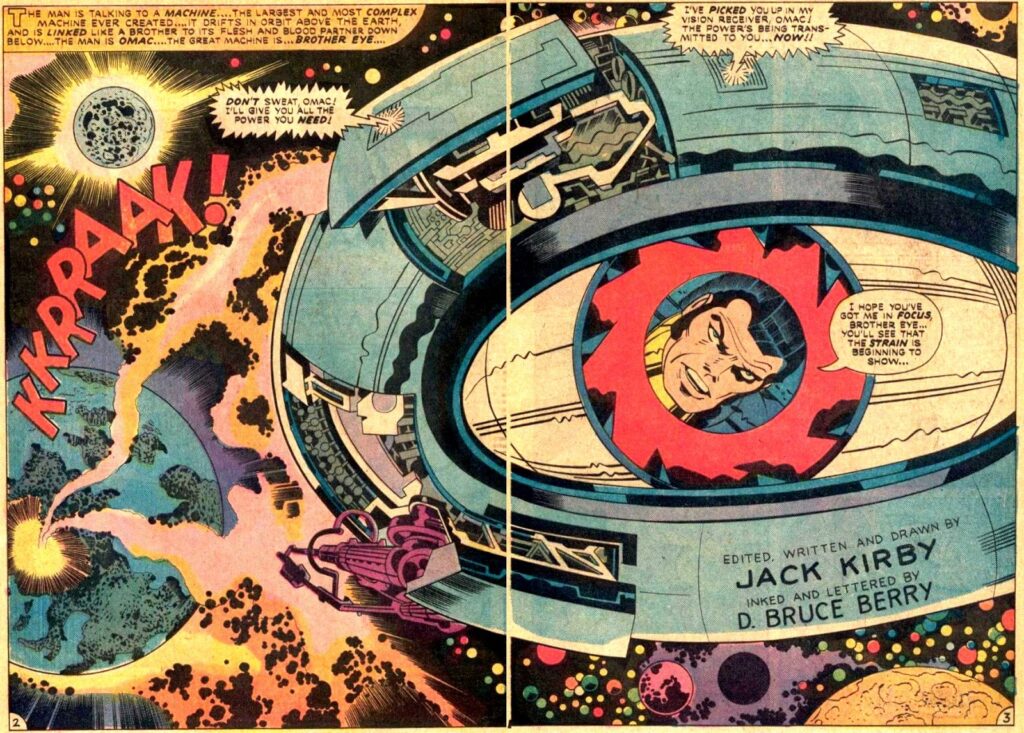
At the heart of OMAC is the story of Buddy Blank, an ordinary man thrust into an extraordinary role as the One Man Army Corps. In a world where the Global Peace Agency reigns supreme, utilizing satellite technology to monitor and manipulate society, Buddy Blank becomes the unwitting vessel for their experiment to create the ultimate super-soldier. Transformed into OMAC, he becomes a one-man wrecking crew, fighting against the forces of tyranny and oppression.
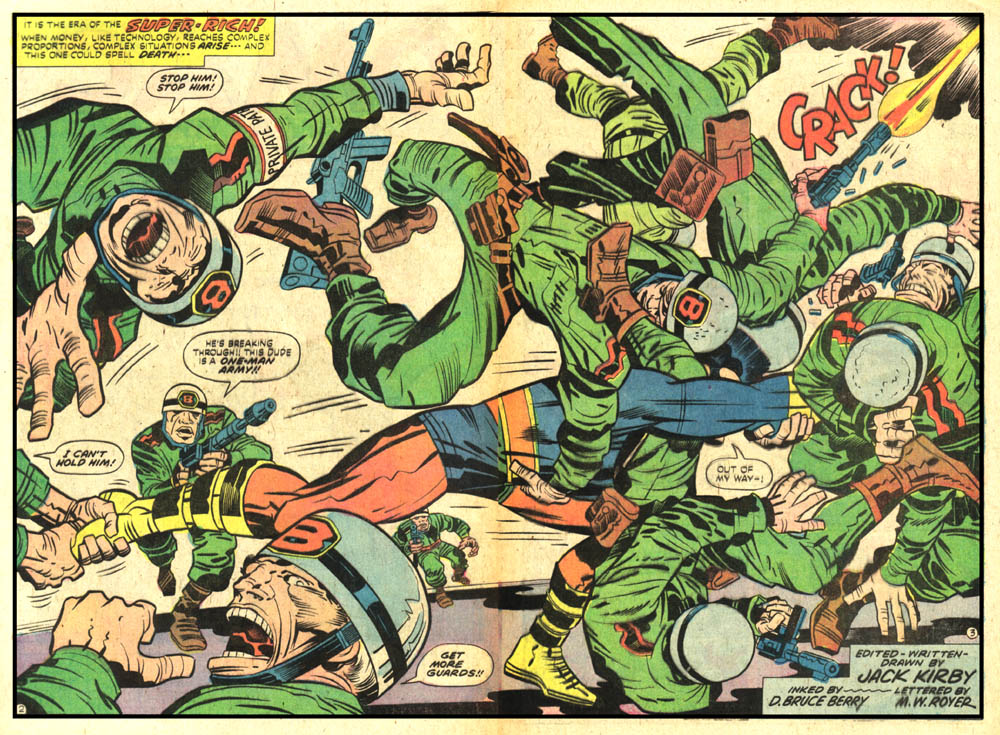
Kirby’s storytelling in OMAC is relentless, with a breakneck pace that mirrors the intensity of the action. The narrative unfolds in a series of high-octane adventures as OMAC battles a myriad of foes, from high-tech threats to mutated monsters. Kirby’s dynamic and kinetic artwork propels the story forward, creating a sense of urgency that keeps readers on the edge of their seats.
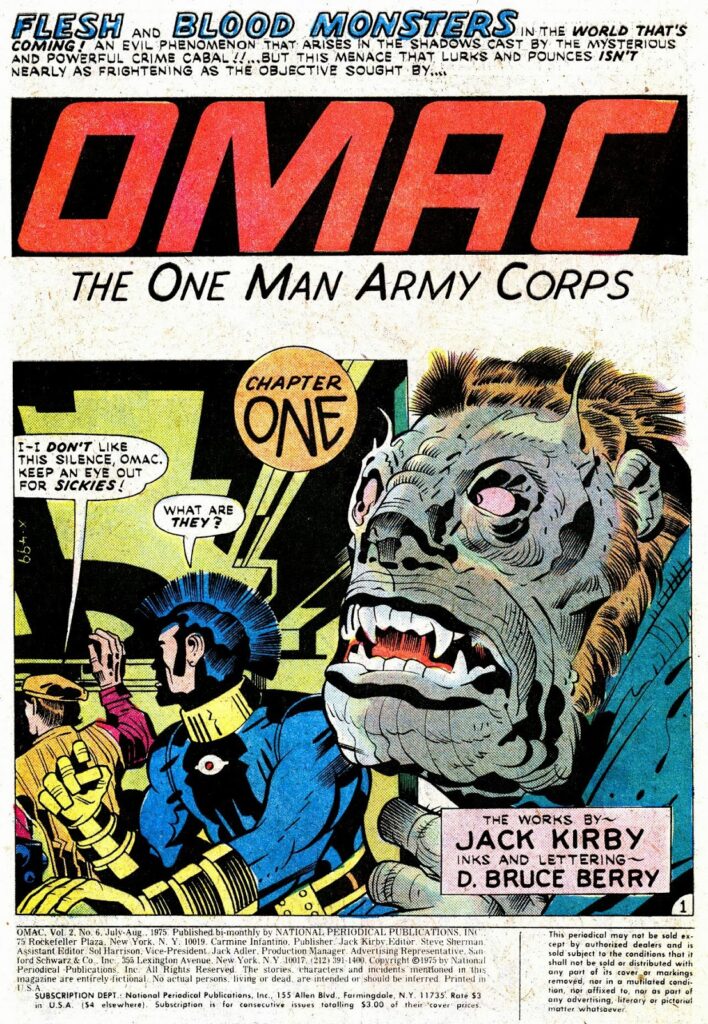
One of the standout features of OMAC is Kirby’s exploration of societal and political themes within the superhero framework. The Global Peace Agency, with its omniscient satellite Brother Eye, serves as a chilling commentary on the potential dangers of unchecked surveillance and centralized control. Kirby’s prescient vision of a world where privacy is a luxury and individual freedoms are sacrificed for the illusion of security resonates eerily in the contemporary landscape.
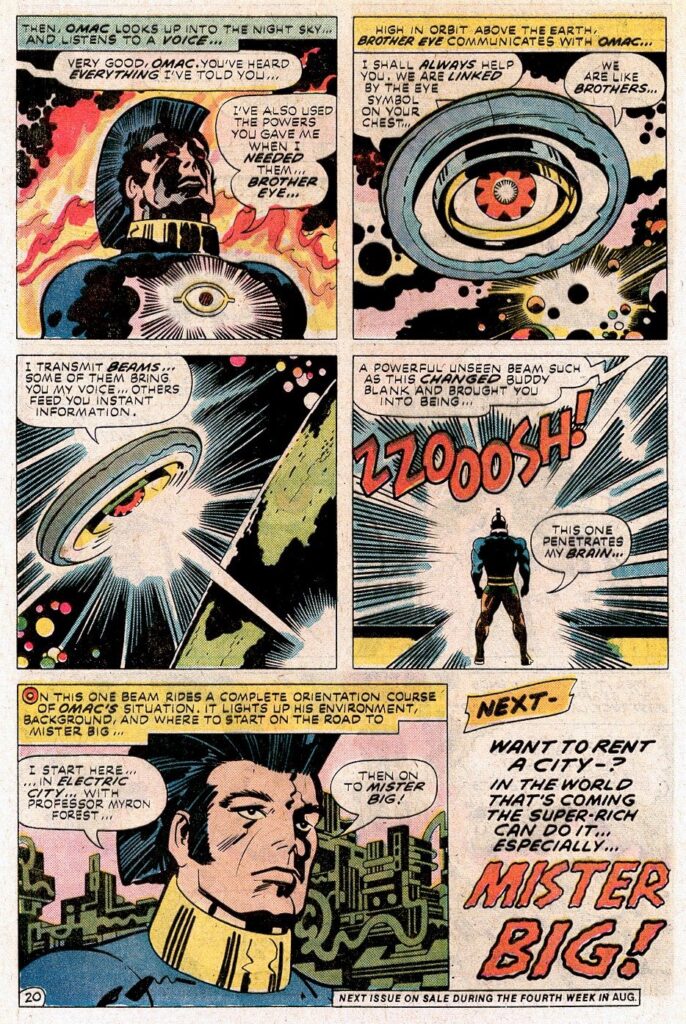
Kirby’s artistic innovation is on full display in OMAC, with bold and expressive linework that captures the energy of each battle and the emotional nuances of the characters. The futuristic designs, including OMAC’s distinctive appearance and the high-tech landscapes, showcase Kirby’s ability to create visually striking and memorable settings. The panel layouts and dynamic compositions contribute to the overall sense of chaos and intensity, enhancing the reading experience.
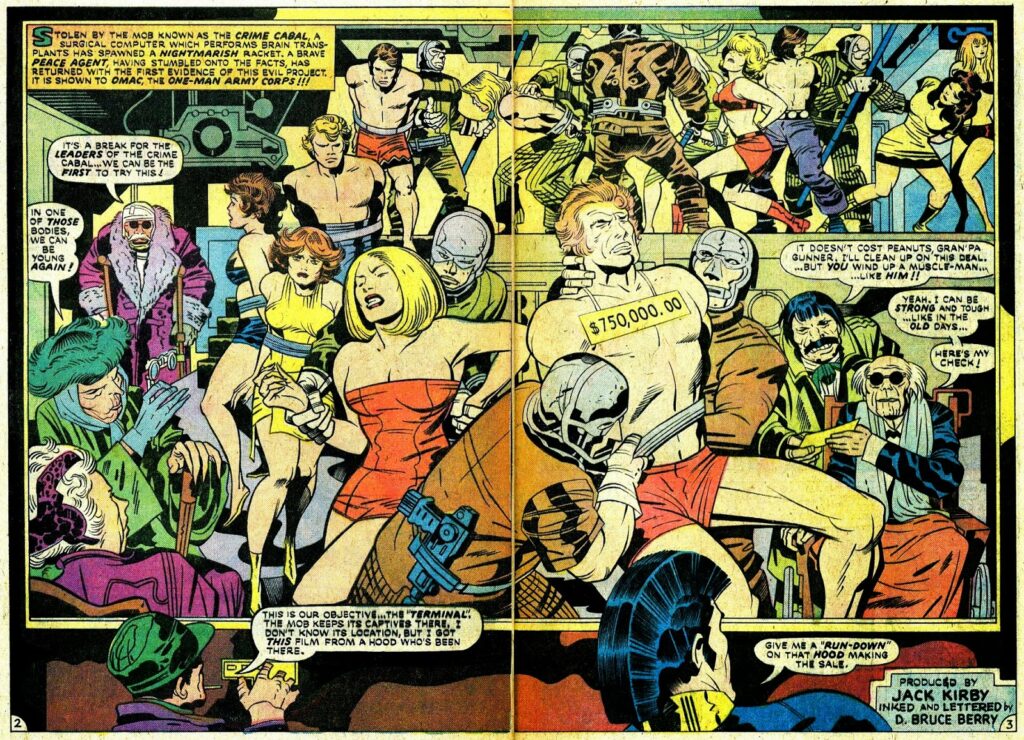
While OMAC may not be as widely known as some of Kirby’s other works, its relevance and impact on the superhero genre cannot be overstated. The blend of action, social commentary, and futuristic aesthetics creates a unique and compelling narrative that stands the test of time. However, the fast-paced storytelling and the density of Kirby’s ideas might be challenging for readers accustomed to more straightforward superhero narratives.
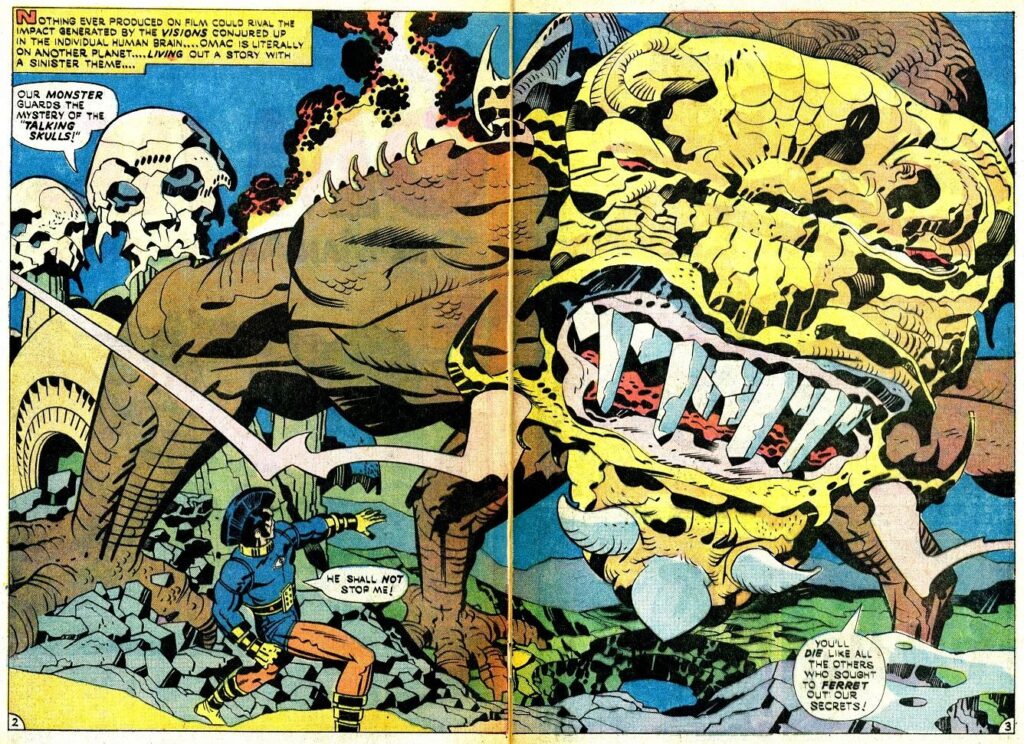
In conclusion, OMAC: One Man Army Corps by Jack Kirby is a dystopian masterpiece that marries intense action with thought-provoking social commentary. Kirby’s ability to infuse a superhero story with relevant and poignant themes showcases his storytelling prowess. OMAC remains a testament to Kirby’s vision, offering readers a gripping and visually stunning exploration of a dark future where one man stands against the tide of oppressive control. For fans of Kirby’s work and those seeking a superhero narrative with substance, OMAC: One Man Army Corps is a must-read that continues to resonate in an era increasingly defined by technology and surveillance.